

Introduction: Cleaner Cuts, Cleaner Power
Here’s the truth. Every extra fraction of a percent in solar cell yield matters to the planet. A laser machine can make or break that margin. Picture a busy line where wafers flick past cameras, vac chucks, and motion stages. One small chip at the edge becomes waste. Now scale that. A single gigawatt line can scrap thousands of wafers a week if the cut is rough or hot. What if the cure is also the cause—thermal spread from old tools?
Today’s factories track everything, yet cracks still hide under coatings. Data shows many losses come from the process itself, not the material. We see this in beam quality issues, in shaky fiducial alignment, and in power converters that drift. So the question is simple: can we tune the cut so clean that stress never starts? Look, it’s simpler than you think (and harder in practice). To ground the discussion, we’ll use the laser machine for cell as our reference case and push past the usual brochure talk. Next, we break down the old flaws—and why they still show up.
Under the Hood: Why Older Paths Still Miss the Mark
Where do legacy setups fail?
As noted earlier, traditional scribing and cutting brought speed, but not control. Mechanical tools leave burrs. Saw marks turn into microcracks after lamination. Early laser rigs fixed some of that, but they brought new problems. Pulse width was wide. Energy was not stable. The heat-affected zone grew and crept under passivation. A galvo scanner would outrun the motion controller, or lag on corners. Then alignment drifted, and no one noticed until yield dropped on the night shift—funny how that works, right?
The deeper issue hides in system balance. If the beam quality (M²) is off, you push more power and cook the edge. If the vacuum chuck vibrates, spot overlap turns uneven. If edge computing nodes near the tool don’t sync to the MES, you miss a trend. In short, older setups treat the laser as a light source, not a process. They skip inline metrology. They skip per-wafer compensation. They skip duty-cycle guards when power converters warm up. The result is thermal debt that shows up as later breaks. The laser machine for cell needs to be a system, not a part, or the line keeps paying for small errors long after the cut.
Comparative Outlook: Principles That Change the Cut
What’s Next
Moving forward, the game shifts from power to control. New machines shape pulse trains like a score, not a shout. Shorter pulse width and tuned pulse energy mean colder ablation. A beam homogenizer flattens hotspots. Real-time sensors watch the plume and adjust the next shot. With tight feedback, the heat-affected zone shrinks, and chipping falls. That is a principle, not a promise. When the tool logs M² drift, then nudges optics before the edge gets rough, you bank yield. When fiducial alignment locks per wafer, corner cracks fade. And when inline metrology pushes corrections back to path planning, you save the lot, not just a piece.
How does this compare on the floor? Old tools aim for speed first, then fix defects later. Newer systems plan speed around stability. They use path smoothing, ramped edges, and adaptive repetition rates. They distribute wear across optics. They keep uptime with modular galvo scanners and hot-swap power drawers. You can see the impact in scrap reports and lamination break tests. A modern laser machine for cell also talks to upstream coaters and downstream testers—closing the loop. Yes, it sounds complex, but the effect is simple: fewer cracks, cooler edges, and calmer operators. That calm shows up in kWh saved and panels shipped.
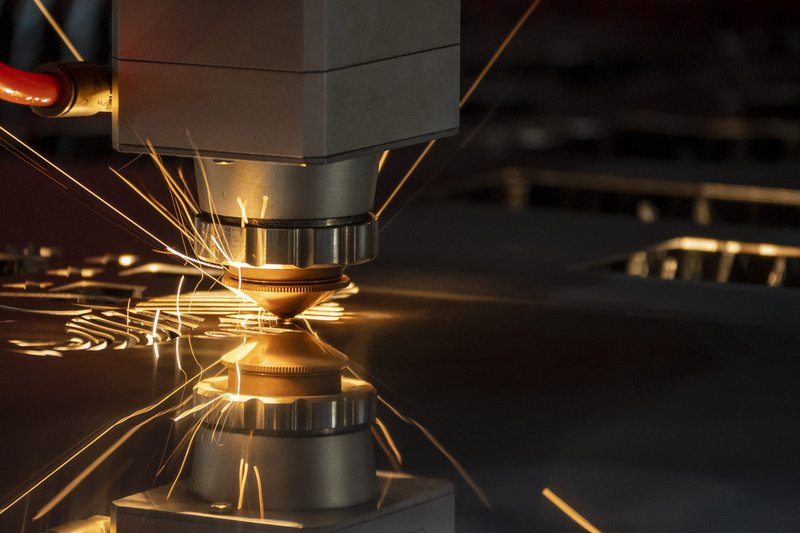
To choose well, set three checks you can measure. First, beam quality and stability: track M² and pulse-to-pulse energy over a shift. Second, process heat: record heat-affected zone width and edge roughness with simple samples per lot. Third, system uptime: log MTBF and alignment drift, not just percent availability. If a tool can hold those three, it will hold your yield. And that, more than any spec sheet, is what the planet needs. For perspective on how vendors tackle these metrics in practice, start with LEAD.


