

To safely inspect a used Dodge Charger Hemi engine before purchasing, focus on five critical check points: listen for the infamous hydraulic lifter/camshaft tick at cold start, check for broken exhaust manifold bolts, scan OBD-II diagnostic codes for misfires (P0300 series) or MDS faults, verify coolant and oil condition for head gasket leaks, and perform a compression test across all cylinders.
Whether you are evaluating a standalone crate assembly or testing a complete vehicle, thorough pre-purchase checks protect you from four-figure repair bills or total engine replacement.
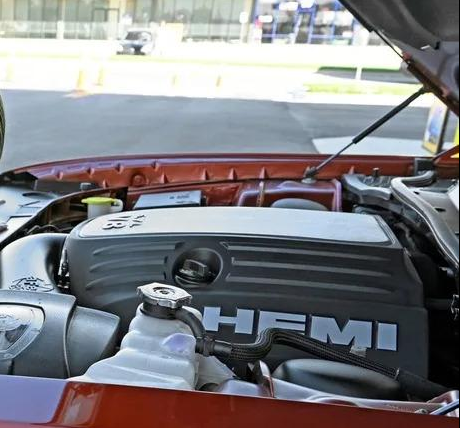
1. Acoustic Inspection: Diagnosing Ticks, Taps, and Exhaust Leaks
Noise diagnosis is your first defense when inspecting a used Dodge Charger Hemi engine. The Hemi platform (5.7L, 6.4L 392, or 6.2L Supercharged) is famous for noise characteristics that range from harmless exhaust leaks to catastrophic internal engine failure.
The “Hemi Tick”: Lifter Roller vs. Camshaft Lobe Failure
The most severe mechanical issue on Eagle and Apache Gen III Hemi engines stems from roller lifter bearing failure. When needle bearings seize inside a hydraulic roller lifter, the roller stops spinning and grinds down the camshaft lobe.
- Cold Start Behavior: Listen near the front wheel wells and lower engine block during a true cold start. A deep, rhythmic metallic tapping that persists after the engine reaches operating temperature signals worn camshaft lobes and failed lifters.
- Exhaust Manifold Heat Shield Leak: Often confused with internal tick, factory rear exhaust manifold bolts frequently snap due to thermal expansion cycles. A loud ticking noise that disappears or quietens after 2–3 minutes of idling usually indicates an exhaust leak at the cylinder head interface rather than valvetrain damage.
Hemi Engine Sound Diagnostic Matrix
| Sound / Symptom | Primary Source | Urgency & Severity | Estimated Repair Scope |
| Sharp ticking on cold start, vanishes warm | Broken manifold bolt / warped header | Low–Moderate | Replace manifold bolts & gasket |
| Loud rhythmic metallic clatter (hot or cold) | Seized lifter roller grinding cam lobe | Critical / High | New camshaft, lifters, oil pumpflush |
| Front cover whining / grinding | Water pump bearing / timing chain tensioner | Moderate | Replace water pump or timing set |
| Deep knock from lower crankcase | Spun rod bearing / oil starvation | Fatal | Full engine rebuild or replacement core |
2. Fluid Analysis & Physical Health Checks
Visual fluid checks reveal how well the engine was maintained by previous owners.
Oil Cap, Dipstick, and Filter Inspection
- Milky Residue: Pull the oil filler cap and check for a yellowish-white emulsion. While minor condensation can occur from short drives, heavy residue indicates coolant mixing with engine oil due to blown head gaskets or warped cylinder heads.
- Oil Level & Smell: Low oil levels accelerate Hemi lifter starvation. Dark, gritty oil smelling strongly of unburnt gasoline signals worn piston rings or extreme blow-by.
- Cut Open the Oil Filter: If inspecting a standalone swapped engine, unscrew the oil filter and cut the pleats open. Shiny bronze or silver metal flakes confirm failing bearings or shredded camshaft lobes.
Coolant Expansion Tank Inspection
Open the plastic coolant reservoir when the engine is completely cold. Look for oil slicks floating on top of the coolant, excessive rust discoloration, or white powder around the cap indicating overheating conditions.
3. OBD-II Diagnostics and Computer Data Analysis
Never buy a modern performance motor relying solely on visual checks. Connect an OBD-II code scanner or live-data tool to assess ECM memory.
4. Mechanical Compression & Leakdown Testing
Performing a compression test across all 8 cylinders is necessary before finalizing a purchase on any standalone used dodge charger hemi engine.
- Standard Pressure Targets: A healthy 5.7L or 6.4L Hemi should yield 170 to 210 PSI per cylinder at cranking speed, with no more than a 10% variance between the highest and lowest reading.
- Leakdown Thresholds: Cylinder leakdown should remain under 15%. Air escaping through the throttle body indicates leaking intake valves; air escaping through the tailpipe points to exhaust valve scoring; bubbles in the radiator neck indicate cracked cylinder heads or blown head gaskets.
5. Multi-Displacement System (MDS) & Oiling System Checks
Gen III 5.7L and select 6.4L Hemi engines feature Mopar’s Multi-Displacement System (MDS), which deactivates cylinders 1, 4, 6, and 7 during light cruise to save fuel.
How MDS Impact Valvetrain Longevity
Special locking lifters control MDS. Low oil pressure or extended oil change intervals starve these solenoids, causing lifter pins to stick.
Check hot idle oil pressure via the gauge cluster or scanner. A healthy hot Hemi idle should hold at least 25–35 PSI. If hot idle pressure drops below 20 PSI, the oil pump or main bearings are worn, putting the lifters at risk.
Complete Pre-Purchase Inspection Checklist
Follow this quick step-by-step procedure when viewing a vehicle or standalone motor:
- Verify Engine VIN & Block Stamp: Ensure the engine block numbers match the chassis VIN and vehicle title.
- Cold Engine Start Test: Turn key on a completely cold engine while listening closely to the upper cylinder heads.
- Inspect Exhaust Headers: Look for missing bolt heads along the back corners of the exhaust manifolds.
- Scan Live ECM Data: Check fuel trims, knock sensor activity, and active/pending misfire counters.
- Check Engine Bay Wiring: Look for spliced wiring, melted harnesses near headers, or damaged coil pack connectors.
- Test Drive / Load Test: Under hard acceleration, verify smooth power delivery without hesitation, smoke, or sudden oil pressure drops.
How many miles does a Dodge Charger Hemi engine last?
With proper maintenance and 5,000-mile oil change intervals using quality synthetic oil, a 5.7L or 6.4L Hemi engine regularly lasts between 150,000 and 250,000 miles.
What is the most common problem with a Dodge Charger Hemi engine?
The most common problems are hydraulic lifter roller failure (leading to camshaft lobe damage) and broken exhaust manifold bolts caused by thermal stress.
How can you tell if a Hemi tick is serious?
If the ticking noise is loud, metallic, speeds up with engine RPM, and remains loud after the engine reaches full operating temperature, it is a serious lifter/camshaft failure.
Can you drive a Hemi engine with a tick?
Driving with an exhaust leak tick is safe temporarily. However, driving with a lifter tick shaves metal shavings into the crankcase, destroying bearings and requiring a full engine replacement.
Does synthetic oil prevent Hemi lifter tick?
Yes, using full synthetic oil (e.g., 5W-20 or 0W-40 meeting FCA MS-6395 specifications) along with quality filters and minimizing idle time significantly reduces the risk of lifter wear.
Frequently Asked Questions (FAQs)
What tools do I need to inspect a standalone used Hemi motor?
You need a spark plug socket set, a mechanical compression tester, a breaker bar to turn the crankshaft manually, a digital borescope camera, and a 12V jumper lead to run starter motor tests.
Should I avoid high-mileage used Dodge Charger engines?
Not necessarily. A high-mileage motor with complete service records, consistent synthetic oil changes, low idle hours, and no valvetrain noise is safer than a lower-mileage engine that suffered long idling periods or skipped oil changes.
What is the difference between 5.7L and 6.4L Hemi inspections?
Both engines share valvetrain geometry and suffer similar lifter risks. However, 6.4L 392 engines run higher compression and feature active intake manifolds, so checking intake runner valve operation and spark plug condition is critical.
How do idle hours affect a used Hemi engine?
High idle hours are damaging to Hemi engines because low oil pump RPM reduces splash lubrication to the camshaft and lifters. Always check engine idle hours via the dashboard menu on 2011+ Chargers.
Is it cheaper to rebuild a ticking Hemi or buy a used engine?
Replacing a camshaft, lifters, head gaskets, and oil pump costs between $2,000 and $3,500 in labor and parts. If metal debris has entered the lower block, buying a tested, low-mileage used dodge charger hemi engine from a trusted auto salvage locator is usually faster and more cost-effective.


